
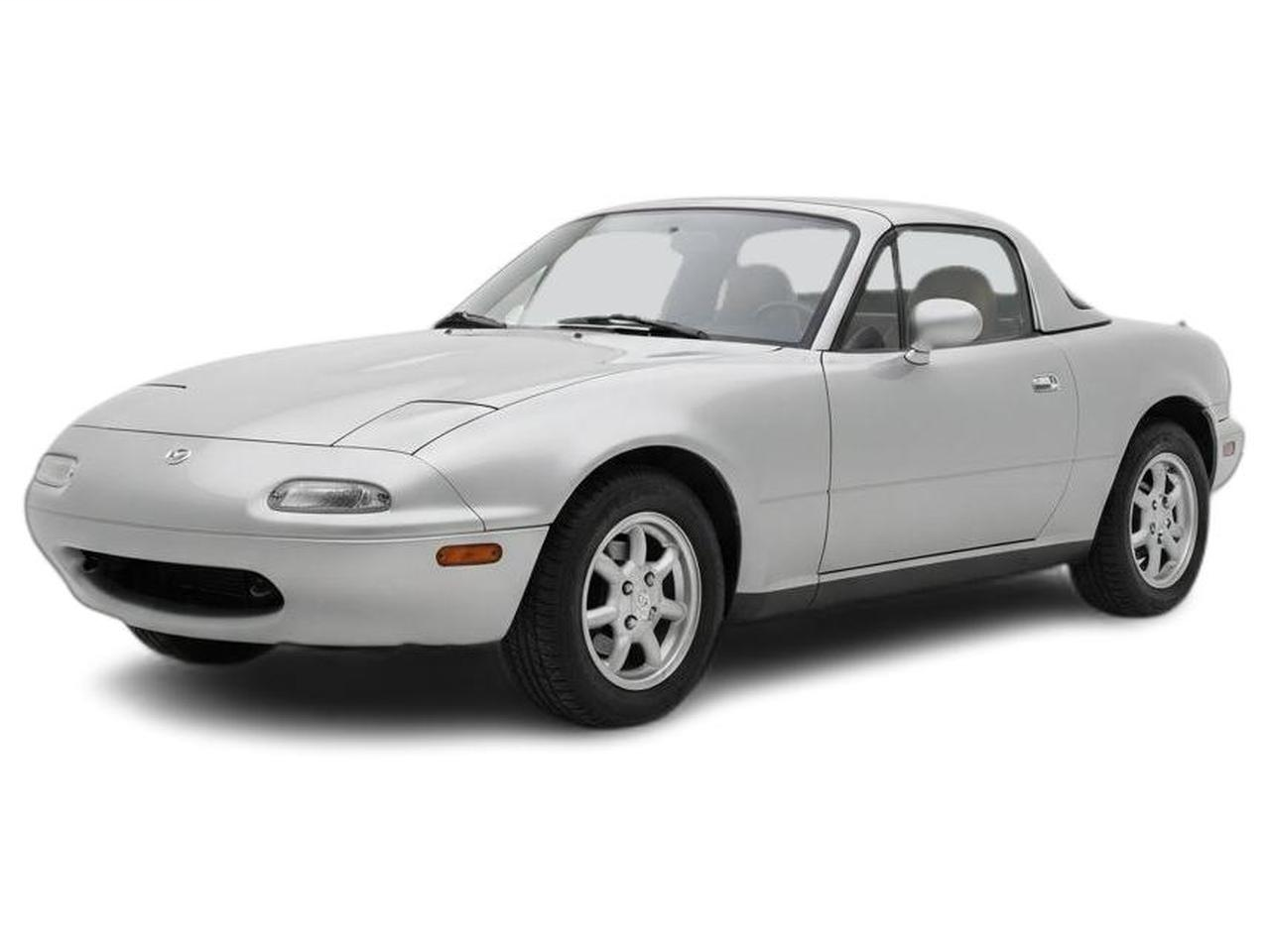
The 1995 Mazda MX-5 Miata, a second-generation NB model, is a compact, rear-wheel-drive sports car known for its pure driving fun. First introduced in 1989, the NB generation ran from 1998 to 2005, with the 1995 model year belonging to the first generation (NA). Available in trims like the base, popular options, and limited editions such as the M Edition, its original pricing ranged from around $17,000 to $22,000. Its enduring popularity stems from its lightweight design, exceptional handling, and accessible affordability, embodying the spirit of classic roadsters.
The Good
The 1995 MX-5 Miata offers exhilarating performance through its nimble handling and responsive engine, fostering an emotional connection with driving. Its legendary reliability and remarkable fuel efficiency appeal to practical buyers. The timeless, sporty design and excellent value for money make it a compelling choice for enthusiasts and everyday drivers alike.
The Bad
Potential weaknesses for the 1995 MX-5 Miata include rust, particularly on rocker panels and rear fenders, and potential oil leaks from the rear main seal. Earlier models also had issues with camshafts. Interior wear and tear are common, and the convertible top may need replacement due to age.
1995 Mazda MX-5: Quick Overview
- Engine Options: The 1995 Mazda MX-5 Miata was primarily offered with a 1.8-liter inline-four cylinder engine.
- Horsepower: This engine produced approximately 133 horsepower.
- Torque: Peak torque was around 114 lb-ft.
- Fuel Economy: Estimated fuel economy for the 1995 MX-5 Miata was typically around 23 MPG in the city and 30 MPG on the highway.
- 0-60 Times: Acceleration from 0 to 60 mph was generally in the range of 8 to 9 seconds, depending on transmission and driver.
- Towing Capacity: The MX-5 Miata is a sports car and is not designed for towing; therefore, it has no official towing capacity.
- Transmission Options: Buyers could choose between a 5-speed manual transmission or an optional 4-speed automatic transmission.
- Drivetrain: Rear-wheel drive was standard.
- Suspension: Independent front and rear suspension contributed to its renowned handling characteristics.
- Brakes: Front ventilated disc brakes and rear solid disc brakes were standard.
- Trim-Level Features: The 1995 model year represented the end of the first generation (NA) and offered various packages and limited editions. Key features often included:
- Power windows and mirrors
- Air conditioning (often optional)
- Power steering
- Tilt steering wheel
- AM/FM stereo with cassette player
- Limited-slip differential (often on higher trims or optional)
- Sport suspension tuning on certain trims
- Leather-wrapped steering wheel and shift knob
- Optional hardtop
- Special badging and color schemes on limited editions like the M Edition.
1995 Mazda MX-5 Specifications
Vehicle Information
| Year | 1995 |
| Make | Mazda |
| Model | MX-5 |
| Trim | - |
| Style | M Edition Convertible RWD 5MT 1.8L I4 |
| Type | Convertible |
| Category | passenger |
Manufacturing Details
| Made In | - |
| Manufacturing City | HIROSHIMA |
Dimensions
| Doors | 2-Door |
| Curb Weight | 2200 pounds |
| Gross Vehicle Weight Rating | - |
| Overall Height | 48 inches |
| Overall Length | 157.1 inches |
| Overall Width | 66.7 inches |
| Wheelbase Length | 89.2 inches |
| Standard Seating | 2 |
Engine & Performance
| Engine | 1.8L I4 |
| Engine Size | 1.8L |
| Engine Cylinders | 4 |
| Transmission | 5-Speed Manual |
| Transmission Type | Manual |
| Transmission Speeds | 5-Speed |
| Drivetrain | Rear-Wheel Drive |
Additional Features
| Anti-Brake System | 4-Wheel ABS |
| Steering Type | Rack & Pinion |
Pricing
| Manufacturer Suggested Retail Price (MSRP) | $23,900 |
| Invoice Price | $22,000 |
| Delivery Charges | $500 |
Vehicle History Report
Vehicle
Specifications
Specifications
Ownership
History
History
All History
Events
Events
NMVTIS Title
History Check
History Check
Salvage/Rebuilt
Check
Check
Accident
Check
Check
Theft
Check
Check
Open Lien
Check
Check
Past Sale
Listings
Listings
Safety
Recalls
Recalls
Odometer
Check
Check
Market Price
Analysis
Analysis
What Problems Does the 1995 Mazda MX-5 Have?
The 1995 Mazda MX-5 Miata, being part of the first-generation (NA) known for its robust engineering, generally boasts good long-term reliability. However, like any vehicle of its age, certain issues are frequently reported by owners. One of the most common concerns is rust. Due to its age and the materials used, rust can develop, particularly in the rocker panels, around the wheel arches (especially the rears), and on the subframes. Thorough inspection of these areas is crucial when considering a purchase.
Another reported issue can be related to the engine. While generally reliable, some earlier NA Miatas experienced camshaft wear. Mazda addressed this in later years, and the 1995 model might be less susceptible than very early examples, but it's still something to be aware of. Oil leaks, particularly from the rear main seal, can also occur over time. These can be costly to repair if left unaddressed.
The convertible soft top can also degrade over time, leading to leaks or tears. Replacement is a common maintenance item for older Miatas. Suspension components, such as bushings and ball joints, may also wear out with age and mileage, affecting ride and handling. The clutch and transmission can also show signs of wear, though many Miatas have seen clutch replacements over the years.
In terms of recalls, the NA generation did have a few, but they were typically for minor issues. For instance, some models had recalls related to airbag inflators or potential fuel leaks. It is always advisable to check the National Highway Traffic Safety Administration (NHTSA) website for any outstanding recalls specific to the vehicle's VIN.
Despite these potential issues, the 1995 MX-5 Miata is widely considered a dependable car, especially if it has been well-maintained. Its simple mechanicals make many repairs straightforward for enthusiasts. The key to long-term reliability lies in regular maintenance and addressing minor issues before they become major problems. Owners who diligently follow maintenance schedules and address rust proactively can expect many more years of enjoyment from their Miata.
Another reported issue can be related to the engine. While generally reliable, some earlier NA Miatas experienced camshaft wear. Mazda addressed this in later years, and the 1995 model might be less susceptible than very early examples, but it's still something to be aware of. Oil leaks, particularly from the rear main seal, can also occur over time. These can be costly to repair if left unaddressed.
The convertible soft top can also degrade over time, leading to leaks or tears. Replacement is a common maintenance item for older Miatas. Suspension components, such as bushings and ball joints, may also wear out with age and mileage, affecting ride and handling. The clutch and transmission can also show signs of wear, though many Miatas have seen clutch replacements over the years.
In terms of recalls, the NA generation did have a few, but they were typically for minor issues. For instance, some models had recalls related to airbag inflators or potential fuel leaks. It is always advisable to check the National Highway Traffic Safety Administration (NHTSA) website for any outstanding recalls specific to the vehicle's VIN.
Despite these potential issues, the 1995 MX-5 Miata is widely considered a dependable car, especially if it has been well-maintained. Its simple mechanicals make many repairs straightforward for enthusiasts. The key to long-term reliability lies in regular maintenance and addressing minor issues before they become major problems. Owners who diligently follow maintenance schedules and address rust proactively can expect many more years of enjoyment from their Miata.
How long will the 1995 Mazda MX-5 last?
Based on owner data and typical maintenance, a well-maintained 1995 Mazda MX-5 Miata can reasonably be expected to last for 200,000 to 250,000 miles, or even more. Many owners report vehicles exceeding these figures with diligent care. The long-term durability of the MX-5 is a significant part of its appeal. Its simple, robust mechanicals and lightweight construction contribute to its longevity. Weaknesses that tend to appear over time are primarily related to wear and tear from age and mileage, such as suspension components, clutch wear, and the gradual deterioration of the convertible top. Rust is a critical factor; cars from rust-prone regions will have a shorter lifespan if not protected. However, with regular fluid changes, attention to potential oil leaks, and proactive rust prevention, the 1995 MX-5 demonstrates remarkable endurance, making it a car that can be enjoyed for decades.
What Technology & Safety Features are Included?
The 1995 Mazda MX-5 Miata, in line with its focus on driving purity, offered a relatively minimalist approach to technology and features, especially by today's standards. Built-in tech was primarily centered around basic entertainment and comfort. Standard entertainment typically included an AM/FM stereo with a cassette player. Higher trims or optional upgrades might have included a CD player. Power windows and mirrors were common conveniences, and air conditioning was often an option that many buyers opted for. Power steering was standard, contributing to its nimble feel.
Driver-assistance features were virtually non-existent in the 1995 MX-5. The emphasis was on the driver's direct connection to the road, rather than electronic aids. Features like cruise control were available but not universally standard across all trims.
Safety features were also quite basic. Standard safety equipment included driver and passenger airbags, front seatbelt pretensioners, and anti-lock braking systems (ABS) were often available as an option, particularly on higher trim levels or as part of specific packages. The compact size and lightweight construction meant that crashworthiness was not as advanced as in larger, heavier vehicles of the era. Crash-test ratings from the 1990s are less comprehensive than modern ratings. However, the MX-5 was designed with a reinforced safety cage and side-impact beams. While specific NHTSA or IIHS ratings for the 1995 model year are not readily available or as detailed as today's, the car was built to meet the safety standards of its time. The focus was on active safety through good handling and braking (especially with optional ABS) rather than extensive passive safety systems. For buyers seeking advanced tech or comprehensive driver-assistance, the 1995 MX-5 would feel very rudimentary, but for those who prioritize a connected driving experience, its simplicity is part of its charm.
Driver-assistance features were virtually non-existent in the 1995 MX-5. The emphasis was on the driver's direct connection to the road, rather than electronic aids. Features like cruise control were available but not universally standard across all trims.
Safety features were also quite basic. Standard safety equipment included driver and passenger airbags, front seatbelt pretensioners, and anti-lock braking systems (ABS) were often available as an option, particularly on higher trim levels or as part of specific packages. The compact size and lightweight construction meant that crashworthiness was not as advanced as in larger, heavier vehicles of the era. Crash-test ratings from the 1990s are less comprehensive than modern ratings. However, the MX-5 was designed with a reinforced safety cage and side-impact beams. While specific NHTSA or IIHS ratings for the 1995 model year are not readily available or as detailed as today's, the car was built to meet the safety standards of its time. The focus was on active safety through good handling and braking (especially with optional ABS) rather than extensive passive safety systems. For buyers seeking advanced tech or comprehensive driver-assistance, the 1995 MX-5 would feel very rudimentary, but for those who prioritize a connected driving experience, its simplicity is part of its charm.
What Colors Options are Available?
1995 Mazda MX-5 Prices and Market Value
When new, the 1995 Mazda MX-5 Miata had an original MSRP that typically ranged from approximately $17,000 to $22,000, depending on the trim level and optional features. As a sports car with a dedicated following, the MX-5 has defied typical depreciation trends for many vehicles. While it has depreciated from its original price, well-maintained examples have proven to hold their value remarkably well, especially compared to other cars from the same era. Current used market prices for a 1995 MX-5 Miata can vary significantly, typically ranging from $4,000 to $10,000 or even higher for pristine, low-mileage, or limited-edition models. Factors heavily influencing resale value include the car's condition (both mechanical and cosmetic), mileage, maintenance history, the presence of rust, the functionality of the convertible top, and the overall desirability of specific trims or special editions. Enthusiast demand continues to support the Miata's resale value.
1995 Mazda MX-5 Cost of Ownership
The 1995 Mazda MX-5 Miata is generally considered economical to own. Insurance costs are typically moderate, especially for younger drivers, but can vary based on location and driving record. Fuel costs are low due to its excellent 1.8-liter engine and impressive MPG ratings (around 23 city/30 highway). Maintenance costs are also relatively affordable; its simple mechanics make routine servicing straightforward and many parts are readily available and reasonably priced. Repair costs are usually manageable, with common issues like clutch replacements or minor electrical fixes being standard. While neglect can lead to expensive rust repairs, a well-maintained Miata offers a low-cost entry into the sports car world, making it an economical choice for long-term ownership.
1995 Mazda MX-5 Fuel Efficiency
Fuel Type
Gasoline
Fuel Capacity
11.9 gallons
City Mileage
21 miles/gallon
Highway Mileage
27 miles/gallon
1995 Mazda MX-5 Warranty
Basic
Original warranty
0 months / No data
Estimated remaining
Expired
Powertrain
Original warranty
0 months / No data
Estimated remaining
Expired
Rust
Original warranty
0 months / No data
Estimated remaining
Expired
1995 Mazda MX-5 Insurance
Insurance for a 1995 Mazda MX-5 is moderately priced, reflecting its status as a Convertible with strong safety ratings and
reasonable repair costs.
How Does the 1995 Mazda MX-5 Compare to Other Convertible?
When considering the 1995 Mazda MX-5 Miata, its key rivals in the compact sports car segment of its era included cars like the Toyota MR2, Nissan 240SX, and perhaps a lower-trim Ford Mustang or Chevrolet Camaro for those seeking a sportier coupe or convertible. In terms of performance, the MX-5 excelled with its lightweight chassis and superb handling, offering a more engaging driving experience than many of its RWD competitors, which often prioritized straight-line power over agility. The MR2, with its mid-engine layout, offered sharp handling but was typically more expensive and less practical.
Features on the 1995 MX-5 were basic, focusing on the driving experience rather than creature comforts or advanced tech. Rivals like the Mustang or Camaro might have offered more power and a wider array of optional creature comforts, but often at the expense of the Miata's pure, connected feel. The 240SX offered a good balance of RWD performance and relative affordability, but its handling wasn't quite as refined as the MX-5's.
Reliability is where the MX-5 truly shines. Mazda's reputation for building dependable cars, coupled with the Miata's simple design, made it exceptionally reliable. While rivals like the 240SX were also generally reliable, the MR2 could sometimes present more complex maintenance due to its mid-engine layout. The domestic muscle cars, while powerful, often had more reported mechanical issues.
Price-wise, the MX-5 offered excellent value for a genuine sports car. It was competitively priced against the 240SX and significantly cheaper than the MR2. Even when compared to the base models of American muscle cars, the Miata offered a more sophisticated handling package for a similar price.
Similar Alternatives:
Potentially Better Alternatives (depending on priorities):
Features on the 1995 MX-5 were basic, focusing on the driving experience rather than creature comforts or advanced tech. Rivals like the Mustang or Camaro might have offered more power and a wider array of optional creature comforts, but often at the expense of the Miata's pure, connected feel. The 240SX offered a good balance of RWD performance and relative affordability, but its handling wasn't quite as refined as the MX-5's.
Reliability is where the MX-5 truly shines. Mazda's reputation for building dependable cars, coupled with the Miata's simple design, made it exceptionally reliable. While rivals like the 240SX were also generally reliable, the MR2 could sometimes present more complex maintenance due to its mid-engine layout. The domestic muscle cars, while powerful, often had more reported mechanical issues.
Price-wise, the MX-5 offered excellent value for a genuine sports car. It was competitively priced against the 240SX and significantly cheaper than the MR2. Even when compared to the base models of American muscle cars, the Miata offered a more sophisticated handling package for a similar price.
Similar Alternatives:
- Toyota MR2 (SW20 generation): Offers more power and unique mid-engine dynamics, but generally more expensive and less practical.
- Nissan 240SX (S13/S14 generation): A strong RWD contender, often favored for drifting and tuning, but handling is typically less refined than the MX-5.
Potentially Better Alternatives (depending on priorities):
- For more power and classic styling: A later model year Ford Mustang GT or Chevrolet Camaro Z28 (though often less reliable and less agile).
- For practicality and reliability with a sporty edge: A sporty coupe from Honda like a Prelude, though not RWD.
Final Verdict: Is the 1995 Mazda MX-5 a Good Convertible?

The 1995 Mazda MX-5 Miata is ideal for driving enthusiasts who prioritize a pure, engaging driving experience over brute power or cutting-edge technology. It's perfect for those who appreciate nimble handling, responsive steering, and the joy of open-top motoring. It is absolutely worth buying, especially on the used market. Given its age, buying used is the only option. Look for well-maintained examples with solid maintenance records, paying close attention to rust, especially on the rocker panels and rear fenders. Lower mileage examples in good condition will command higher prices but are generally a safer bet. Specific trims are less critical than overall condition, though a limited edition might offer unique aesthetics. For its price, it offers exceptional value as an accessible sports car that remains fun and relatively economical to own and maintain.